Download the Code
Edition 7.9 is the latest edition of the ADG Code. It can be used from 1 October 2024 and is mandatory from 1 October 2025. The commencement date in some states may be later than 1 October 2024, please check with your competent authority.
Appendix C: Emergency Action (Hazchem) Codes is published here as a stand-alone document. As part of the NTC’s agreement to use this information, Appendix C: cannot be printed or copied.
The dangerous goods list in Table 3.2.3 is also available to download here in excel.
Background
It takes trucks, trains, tanks and bulk containers to transport dangerous goods across Australia. The Code sets out the rules to keep our transport system safe. It provides clear rules, helping everyone involved in the transport of dangerous goods, from those who follow it, administer it and maintain it, to understand their obligations.
The latest edition of the Code is 7.9. For a summary of what’s changed, take a look at the differences between edition 7.8 and edition 7.9 of the Code.
Dangerous goods laws
The code is given legal force in each Australian state and territory by each jurisdiction's dangerous goods transport laws. It is important that the code is read in conjunction with these laws because they provide important information, including supply chain member duties, licence requirements and competent authority panel powers.
Model laws
The state and territory law are based on the Code's model laws.
Exemptions, determinations and approvals
In very limited circumstances, individual competent authorities and the competent authority panel, can make decisions related to the transporting dangerous goods legislation, including exemptions, determinations, or approvals.
Class labels
Class labels for dangerous goods based on UN Model Regulations are available to download below:
How to use:
- The names of the individual label files match the label ‘Model Numbers’ in the Australian Dangerous Goods Code.
- The labels are fully scalable Windows Metafiles that can be inserted into Word documents in the same way as other images.
- The quality of label produced will depend on your printer. On some printers, the text may not properly align in the label.
- The class labels were drawn to the largest size that will fit on an A4 page. When scaled to 100 per cent, they will produce a label with sides measuring approximately 147 mm, which fits no particular code requirement.
- To get a 100 mm square label, they need to be scaled to 68 per cent.
- For a 250 mm placard, scale to 170 per cent.
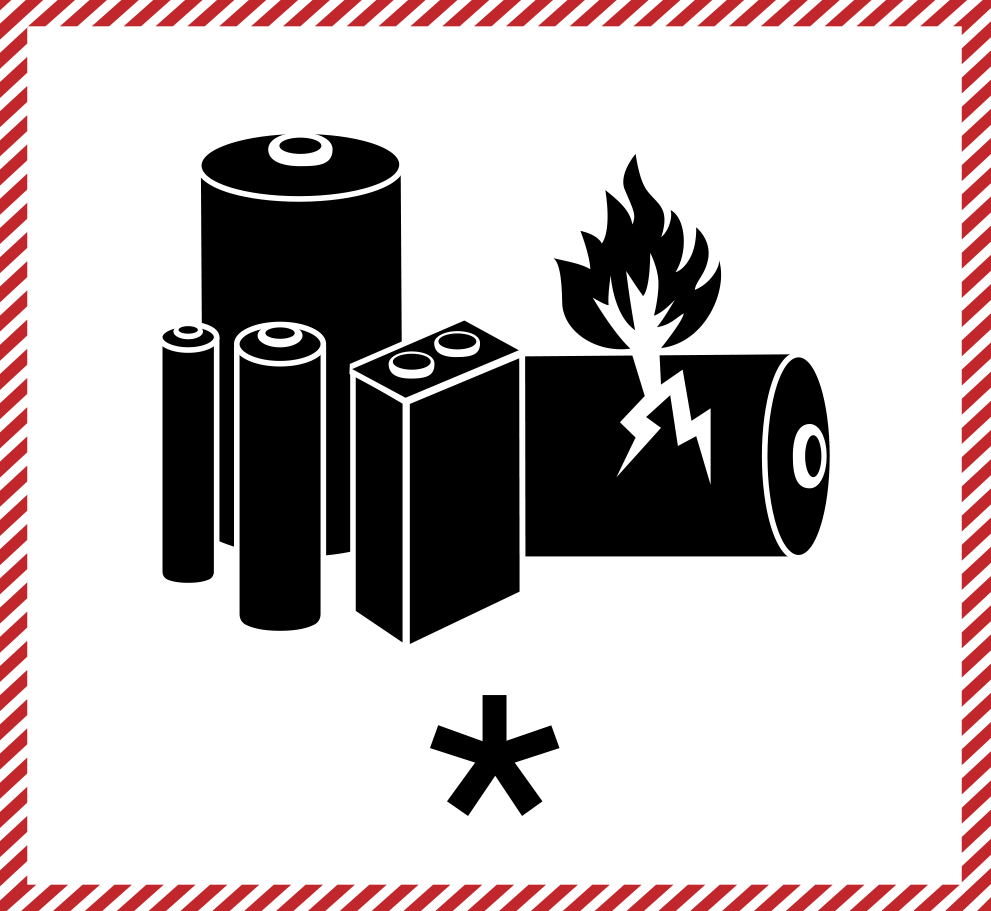
- When printing the lithium battery mark, ensure the rectangle is 120mm wide and 110mm high (roughly 60% scale).
Further information
- For technical advice please contact the regulator in your state or territory.
- For information on transporting dangerous goods by air please contact the Civil Aviation Safety Authority on 131 757.
- For information on transporting dangerous goods by sea please contact the Australian Maritime Safety Authority on +61 (2) 6279 5000.
- For enquiries relating to the national dangerous goods transport legislative maintenance process and the national model laws, please email us.
Operational advice
For operational advice, please direct questions to the competent authority in your state or territory. As the regulators, only they can authoritatively advise on operational issues such as labelling, packaging, quantities or placarding. Our role is limited to maintaining and updating the Code.
Australian and New Zealand Emergency Response Guidebook 2024
ANZ-ERG2024 is available free of charge. It may be reproduced without further permission only if the copy accurately reproduces the entire content (text, format and colours) of this document without modification. Modified copies are not approved emergency information satisfying obligations of the ADG code and associated legislation.
You can purchase A5 size hard copies of the ANZ-ERG2024 via the 'order a printed copy' link above. Payments can be made online with either a VISA or MasterCard. For alternate payment options or any other questions regarding the hard copy, please call Canprint Information Services directly on 1300 889 873 or email sales@infoservices.com.au.
Please note: the ANZ-ERG 2021 is allowed as emergency information while edition 7.9 of the ADG Code is in force.